 |
 |
 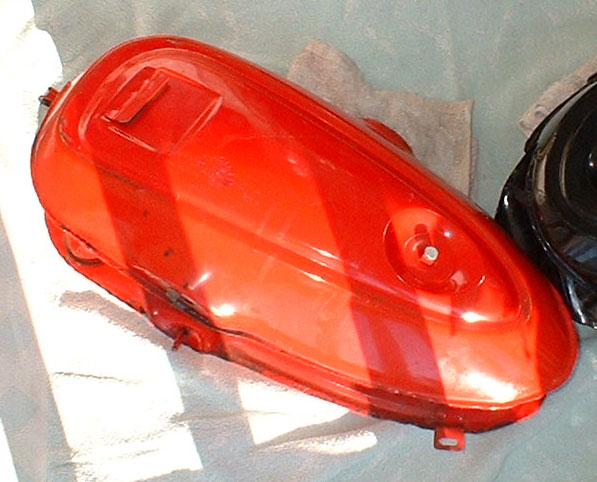 Gas tanks curing in the sun 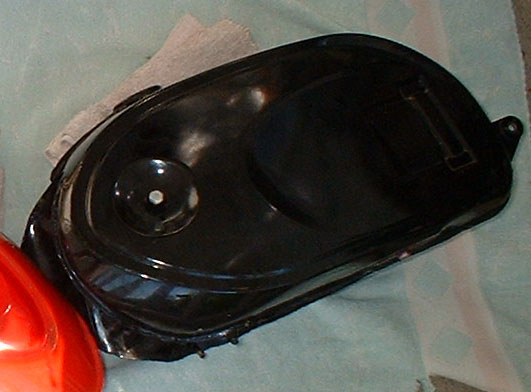 |
BARNEY’S JOURNAL
|
|
|
|
|
|
|
|
Gas tanks curing in the sun |
|
|
|
|
|
|
Here is the clutch outer cover with the two screws loosened, and the cover pried up a little bit. 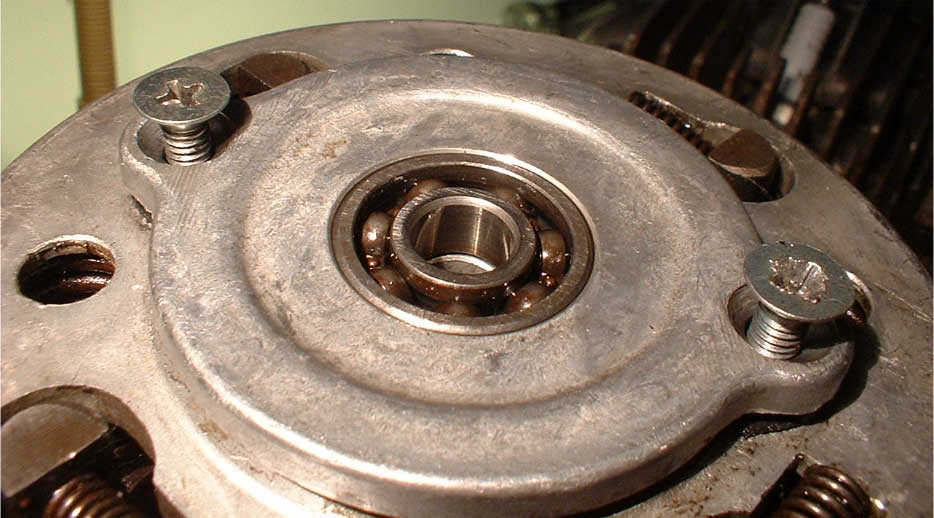 Underneath when the cover was removed. The gasket was sort of smashed stuck to the clutch housing. 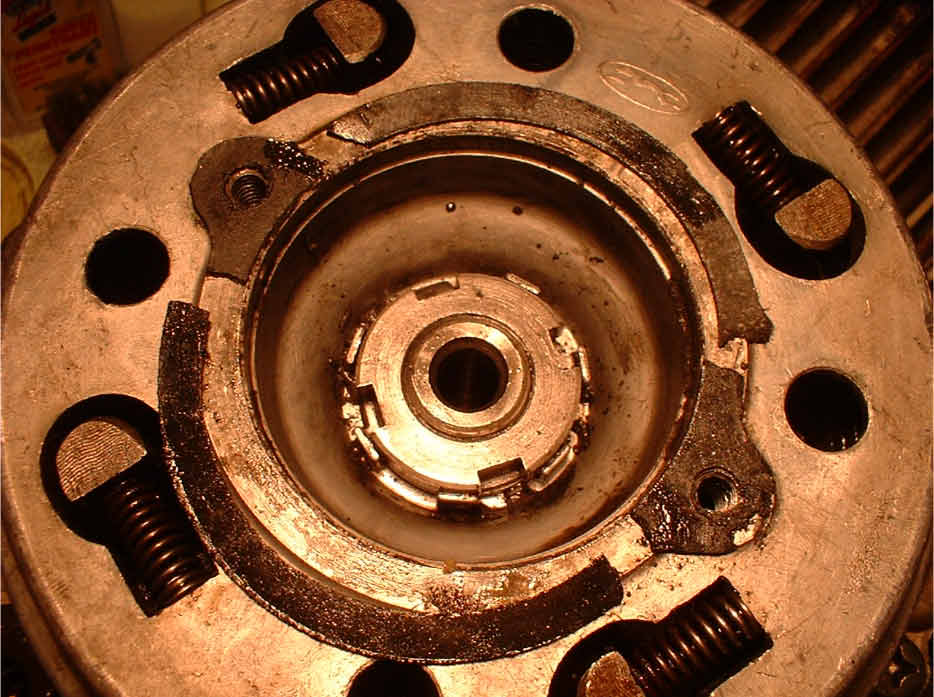 New gasket getting ready to go on. 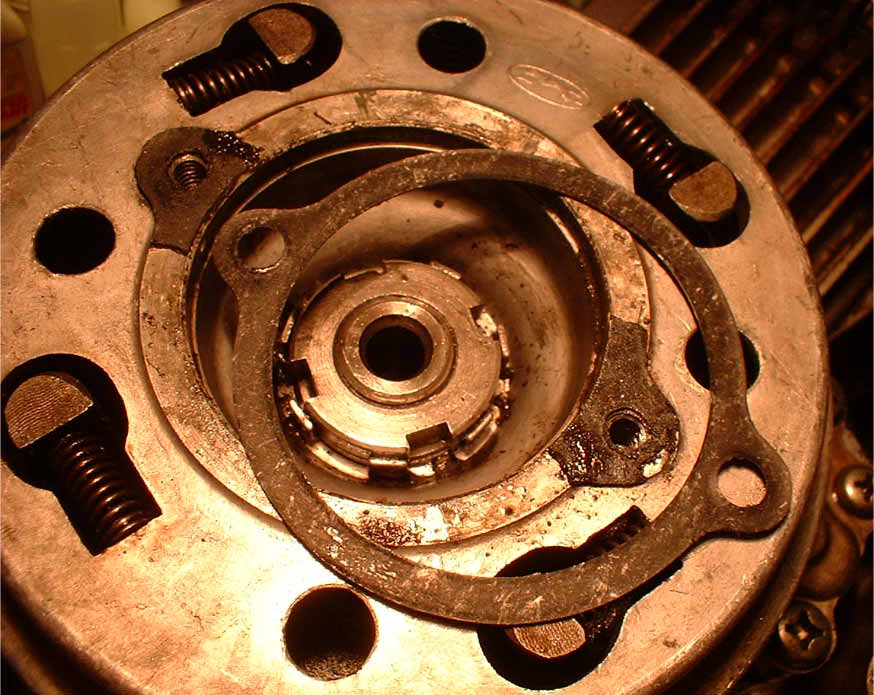 The offset hole in the clutch lifter seems to point roughly at 12 o'clock when mounted. So does gravity then make it fall then spin on the housing? Does some make it to the crankshaft directly? Or does the whole cavity fill up first then oil pressure can be felt in the crankshaft an onward? Does anyone know? If so it seems that one should not rev a cold, just started engine, for a few moments (minutes?) until the clutch cavity fills up and pressure can build to push oil onto the right crankshaft main bearing? Or is that really the end of the journey of some of the oil and is it just through the crankshaft and down back to the screen and pump to start the journey again. I can't seem to figure out how the clutch plates get oil. Is it just by splashing? |
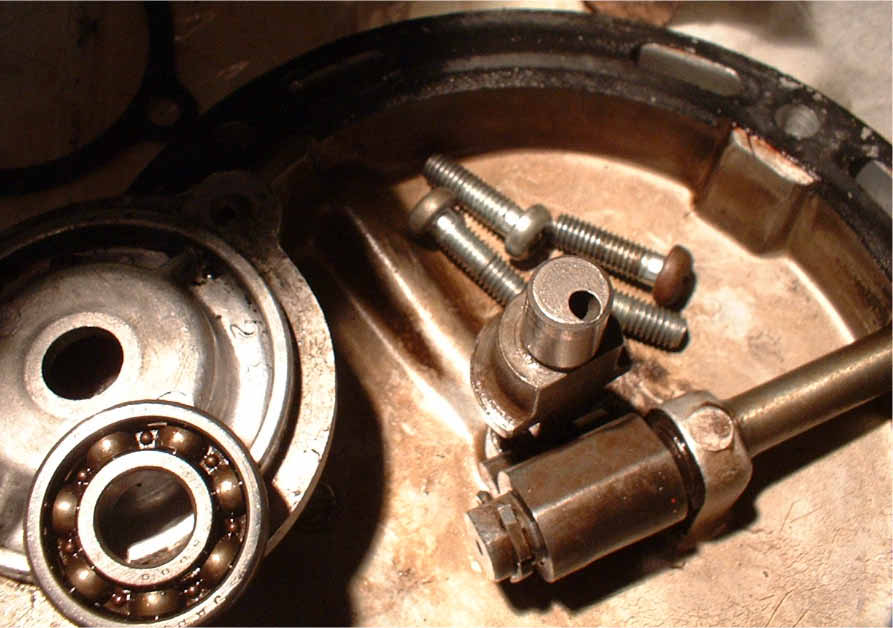 Here is the mangled screw in position. It seems the two screws keep the outer cover gasket tight so oil must be spun inside and then go through the right crankshaft, and to keep the cover from turning. So the screws don't feel much force axially, only the clutch outer cover being compressed on its gasket when the clutch is disengaged which would unload (loosen) the screw thread tension. The screws would feel side (shear) force if the clutch bearing isn't turning freely. It seems the clutch outer cover is close to the case cover so I wouldn't want either screw to come loose! A loose screw could really do some damage to the case and the maybe the clutch and crankshaft? Any thoughts anyone? 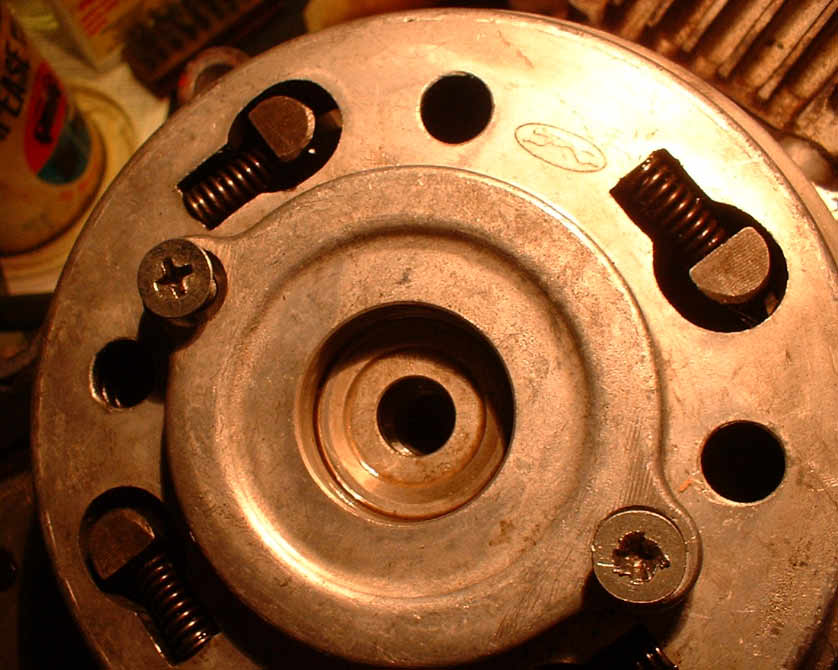 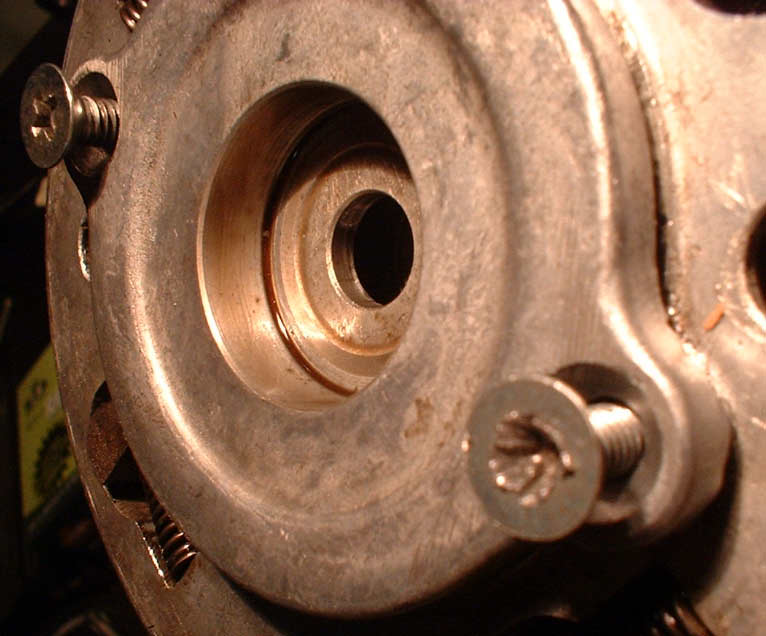 Just a closeup showing the bevelled nature of the clutch outer cover mounting holes. It would seem that one should distribute the force evenly with a bevelled screw head. 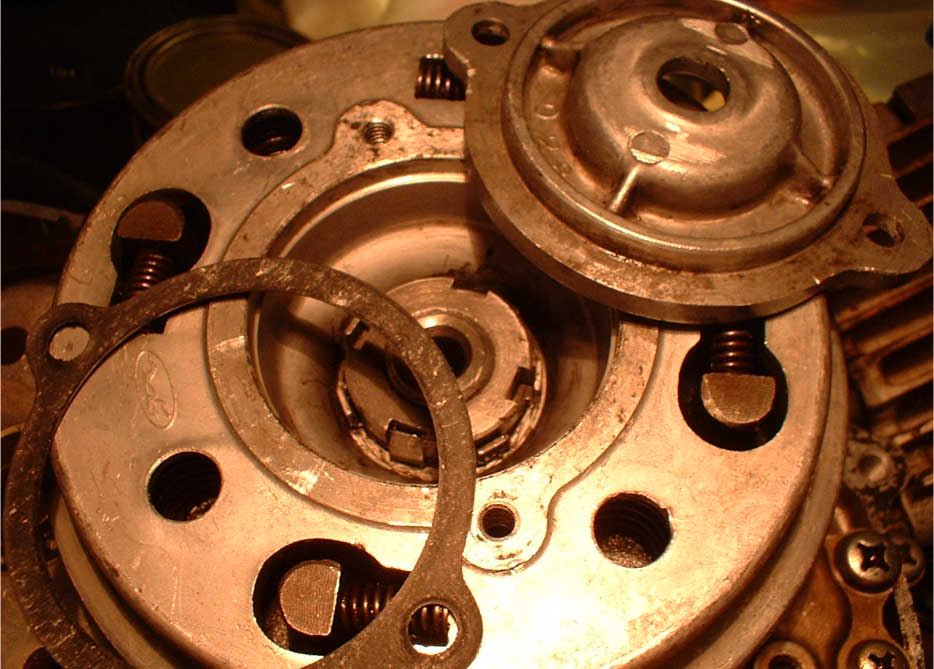 Next question is how to clean and smooth the surfaces for the new gasket? Actually what is the best way for all the gasket surfaces? This is how I "reworked the head of the screw". 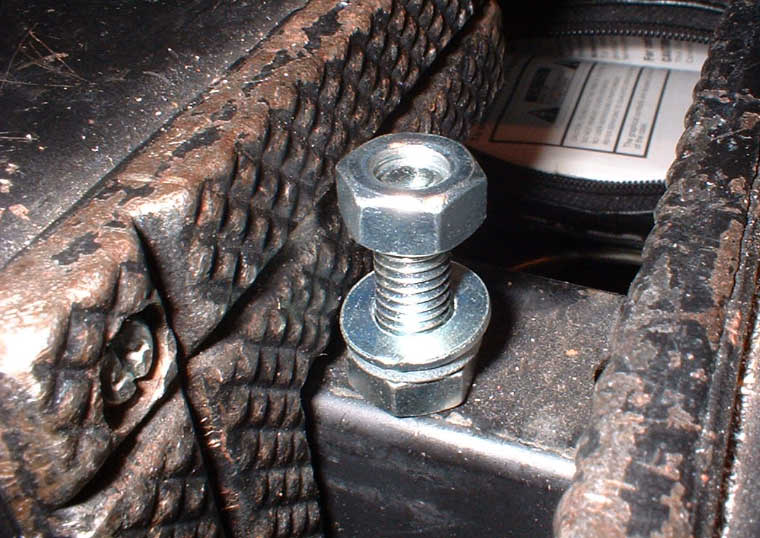 First make a support (for a switch assembly) with a bolt and nut. 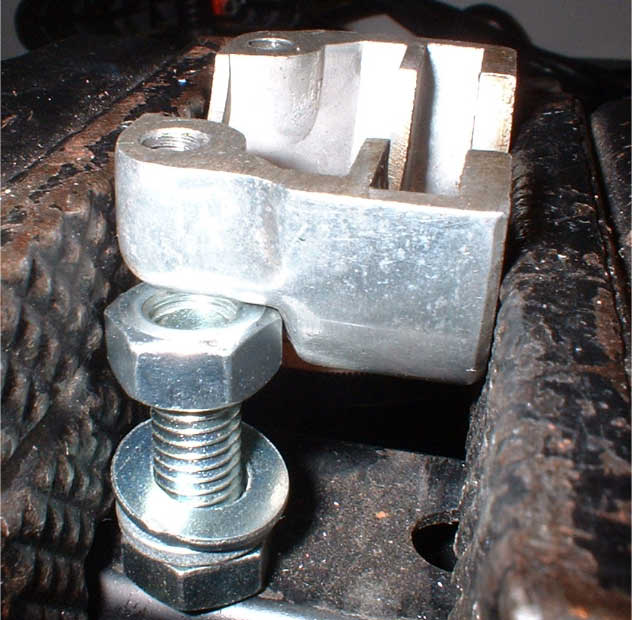 Now add the switch assembly, which has a 5 mm threaded socket, to the vise. 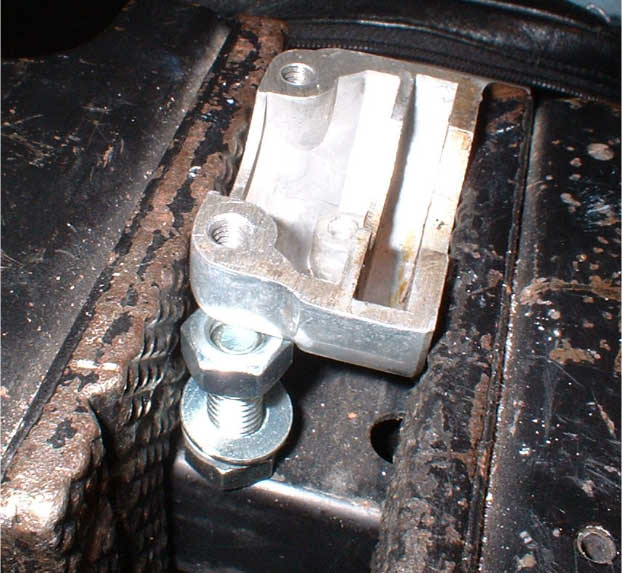 From above. so now we can add the screw 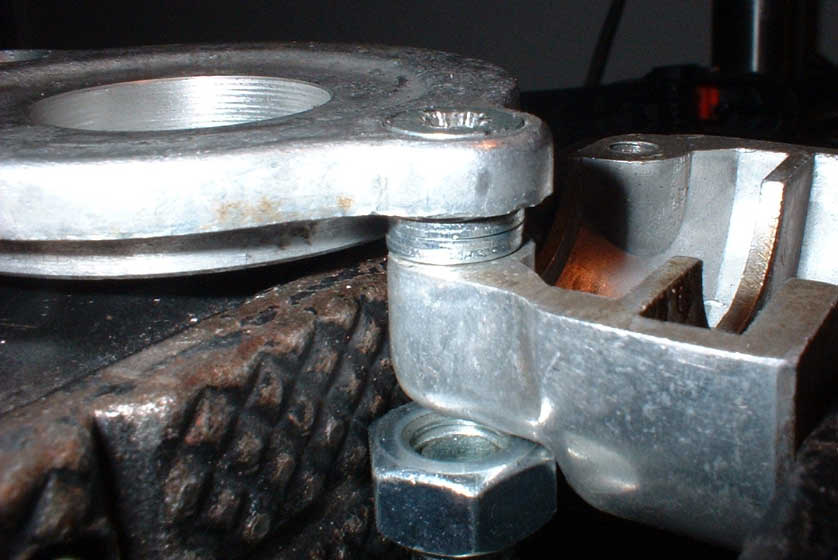 Add some 5 mm washers to get the screw supported by the clutch cover and screw it into the assembly nice and tight. 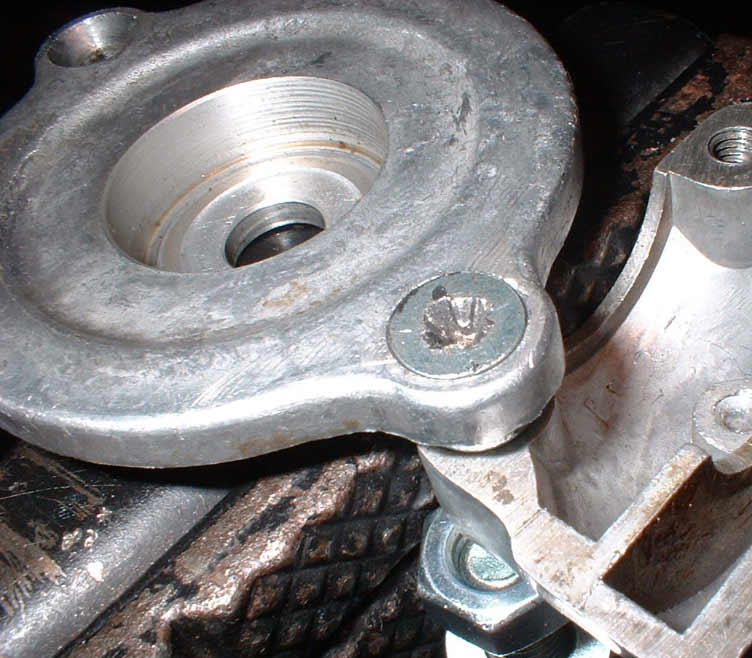 Ready to do some major hitting now! 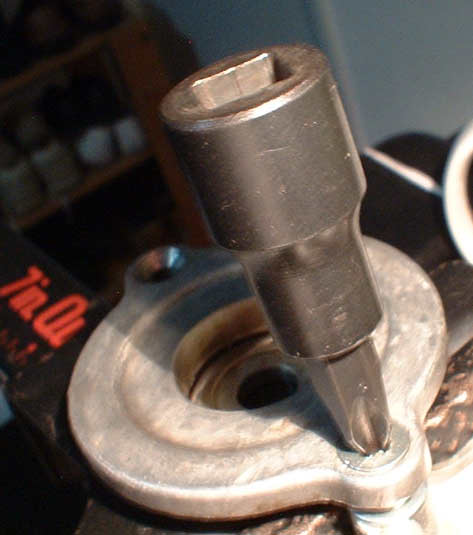 With impact #2 Phillips tip inserted, get the garage clown Bailey to hit a few good blows:-) 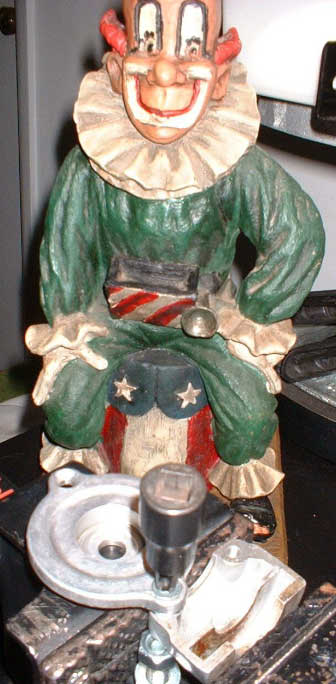 Afterwards. Sitting deeper and grabbing better now. 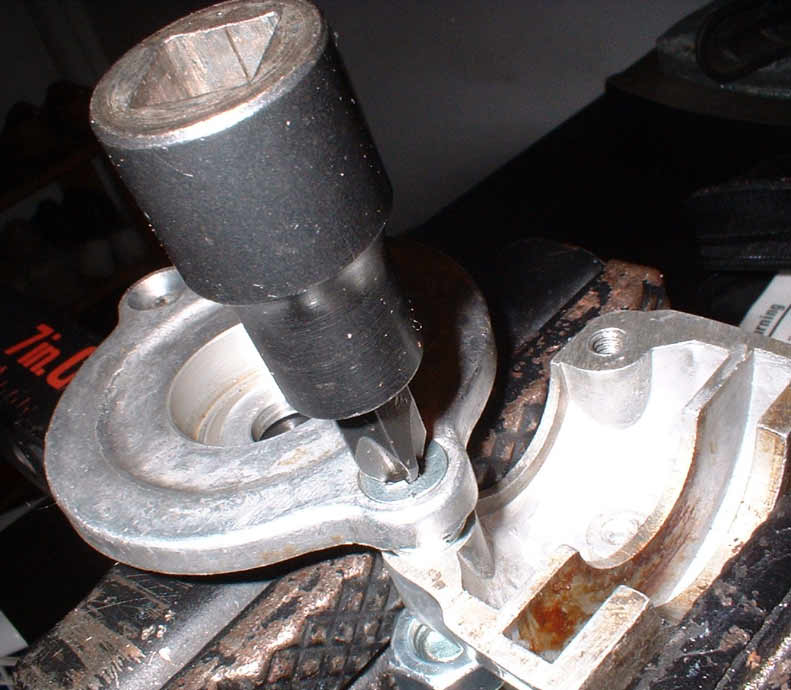 Can even hold it with a (magnetized) screwdriver :-) 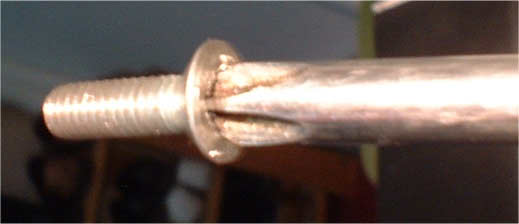 Cleaned as best I could and ready to put back. 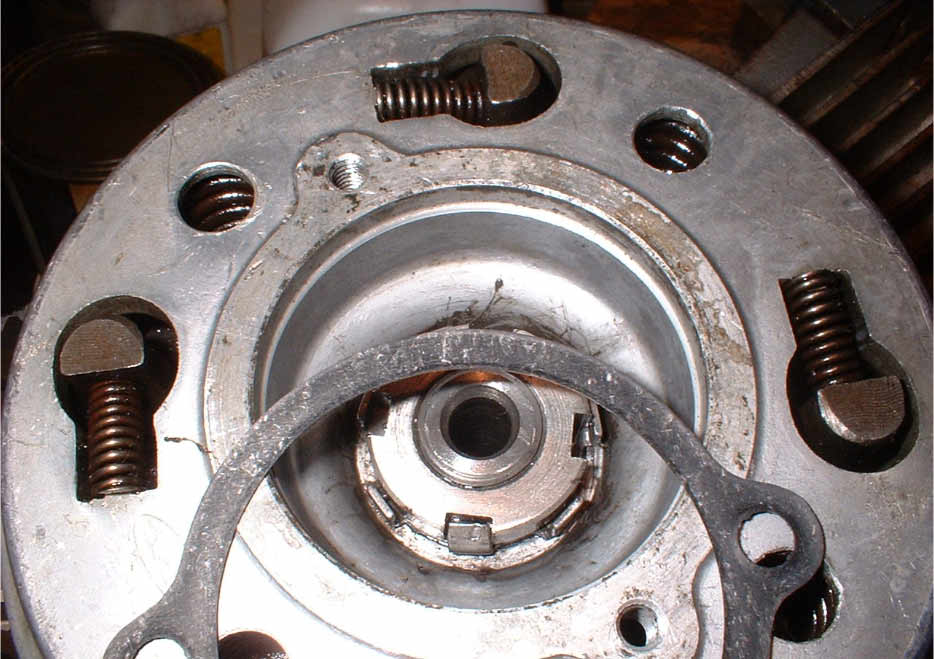 WIth the screw mounted 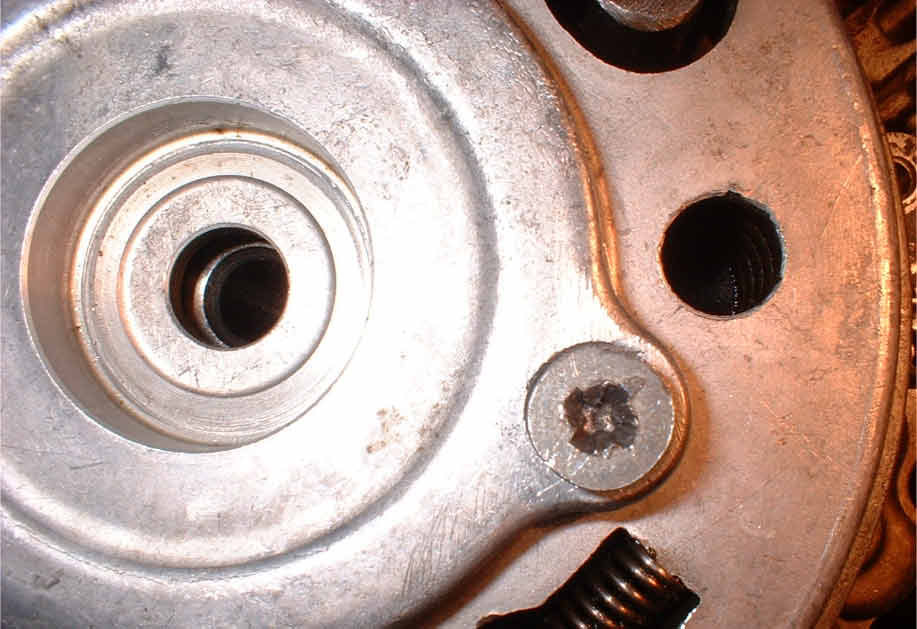 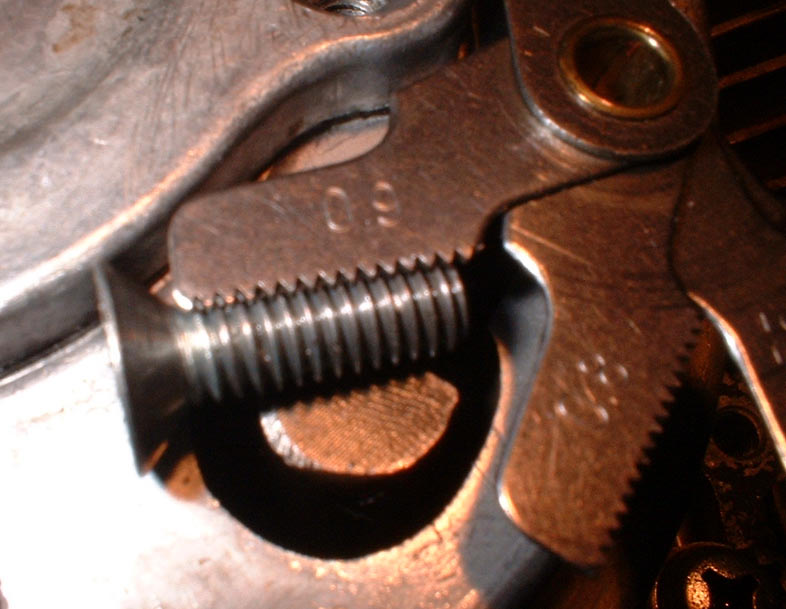 It really is 0.9 mm pitch. My gauge says so :-) Time to be creative. 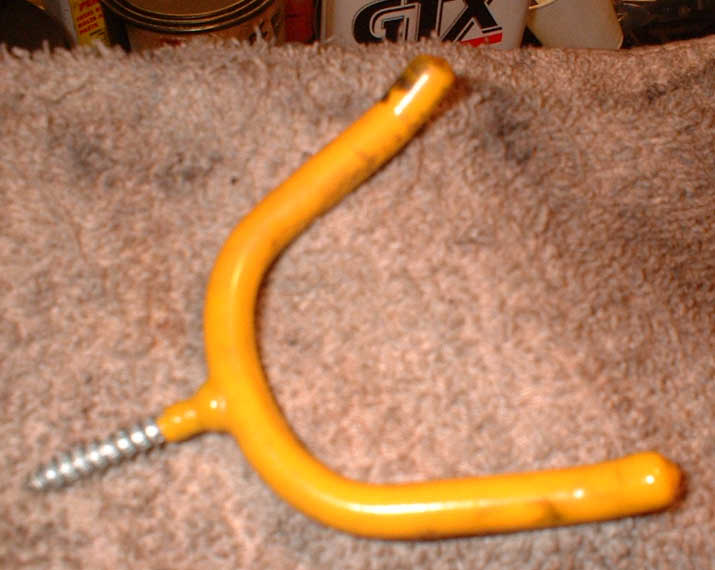 Take one 2 inch wall hanger for tools or whatever in the garage... Spread the ends a little, bend the ends a little. And screw into a foot or two of any wooden handle dowel or rod. And you have... 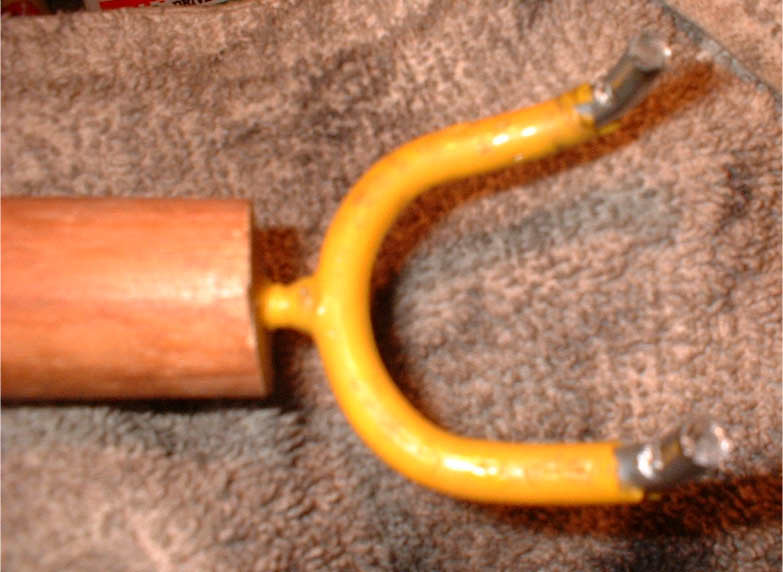 The poor mans clutch holding tool! Worked for me in getting the outer cover screws off. Don't know if it is enough when trying to get a clutch nut loose? 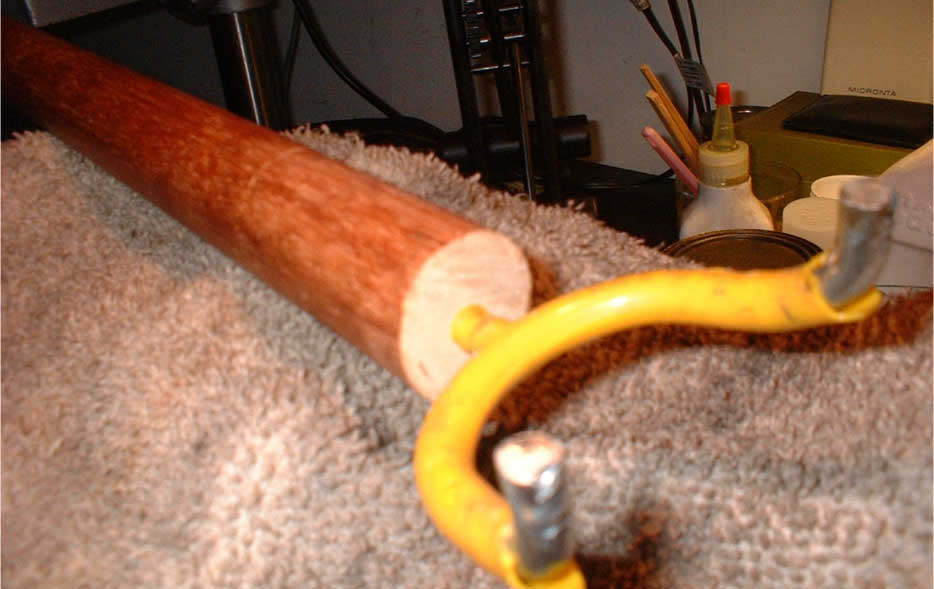 Next, I am going to take the left side off, stator, points, cam, to see how my cam chain adjuster works or doesn't work? Remember I have no visible way to adjust it. Also to check if it is stretched and is the timing correct. TBC |
![[Up Arrow Graphic]](arrowup.gif)



